Book Appointment Now

Spa-Like Bathroom Ideas: How to Create a Calm, Luxurious Retreat at Home
Most mornings in a typical bathroom are rushed: a crowded counter, harsh overhead light, and a shower that does its job without adding anything to your day. A spa-like bathroom changes that routine. When surfaces are clear, light is soft, and materials feel good underfoot and to the touch, the same ten minutes of getting ready can feel noticeably calmer. That appeal is why spa-style bathrooms remain a popular goal for remodels, light updates, small baths, primary baths, and ensuites alike.
A spa feel does not come from decor alone. It comes from balancing comfort, sensory appeal, function, and simplicity. The room still has to handle humidity, daily traffic, wet and slippery floors, and frequent cleaning, so the materials you choose matter as much as the look. Humidity-resistant materials, slip-resistant surfaces, and low-maintenance finishes keep the room relaxing instead of turning it into a chore.
This guide helps you decide how much to change and which features are worth the money. It covers what creates the spa effect, how to plan before buying, color palettes, stone, tile, and wood, showers, tubs, lighting, storage, hardware, and finishing touches, followed by ways to get the look in a small space or on a tight budget and answers to common questions.
What Makes a Bathroom Feel Like a Spa?
A bathroom feels like a spa when it combines a calm palette, natural materials, layered soft lighting, a standout shower or tub, clutter-free surfaces, and sensory touches such as plush towels or a subtle scent.
These elements work together. A restrained palette keeps the eye from jumping around, while natural materials such as stone and wood add texture without noise. Layered lighting removes the harsh glare of a single ceiling fixture. Concealed storage keeps bottles and appliances out of sight, which gives the room the pristine, hotel-like quality people associate with spas. A large bathroom is not required; atmosphere matters more than square footage, and a small room with soft light, light colors, and clear counters can feel more restful than a large, cluttered one.
The difference from a traditional bathroom is mainly one of priorities. Traditional bathrooms are designed around durability and speed, so they tend to be function-only spaces. Spa-inspired bathrooms are still functional but are designed around the experience of using them.
| Attribute | Traditional bathroom | Spa-like bathroom |
|---|---|---|
| Design priority | Durability and speed | Relaxation and experience |
| Lighting | Single overhead or vanity bar | Layered ambient, task, and accent light |
| Palette | Often white or builder-standard | Restrained, soft, and earthy tones |
| Materials | Practical synthetic finishes | Natural stone, wood, and textured tile |
| Storage | Open shelves and counter space | Concealed, with clear surfaces |
| Focal point | Rarely defined | A statement shower or soaking tub |
Plan Your Spa Bathroom Before You Buy Anything
Plan a spa bathroom by deciding first what experience you want, then fitting the layout, budget, and unseen systems around it. Choosing a single tile or faucet first often leads to compromises later.
Define the experience clearly: a long soak, steam, rainfall showering, or a quiet morning routine. Each points to different features and space needs. A soaking tub needs floor area and structural consideration, a steam shower needs a sealed enclosure, and a quiet routine may depend mostly on lighting and storage. Next, decide where to anchor the room, usually with the tub, shower, or vanity wall, and keep circulation open around it. Separating wet and dry zones reduces both physical and visual clutter, because towels, mats, and products stay where they are used.
Budget tiers generally fall into three levels: a refresh (paint, lighting, hardware, textiles), a mid-range update (new vanity, tile, fixtures, a glass enclosure), and a full remodel (layout changes, a wet room, custom shower bases, stone slabs). The main cost drivers are moving plumbing, the amount and type of tile or stone, custom glazing, and labor. A bathroom remodel cost guide can help you refine numbers for your area.
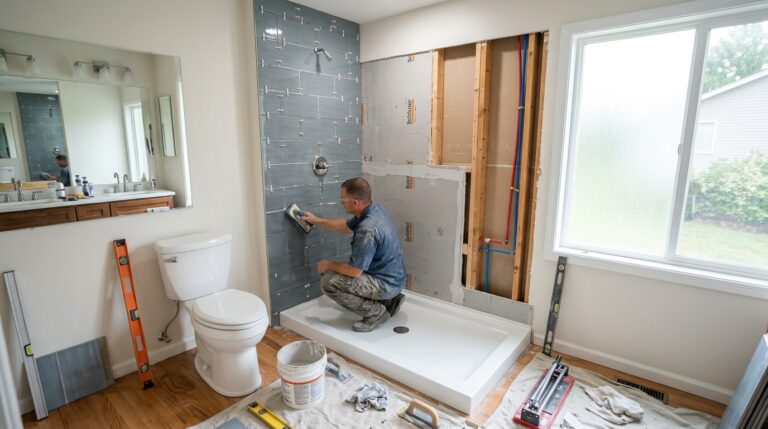
The least visible priorities often decide long-term results. Waterproofing, such as a membrane behind shower tile, protects walls and subfloors, and a wet room depends on it entirely. Exhaust ventilation removes moisture that would otherwise cause mildew, peeling paint, and failing grout.
- Write down the main experience you want: soaking, steam, rainfall showering, or a calm routine.
- Choose the anchor feature and keep clear walking space around it.
- Separate wet and dry zones.
- Pick a budget tier and list what drives its cost.
- Budget for waterproofing and an exhaust fan sized for the room.
- Confirm whether permits are needed before finalizing the layout.
Spa Bathroom Color Palettes
The best color for a spa bathroom is a soft, muted shade such as warm white, light greige, sage, or pale blue-green. These colors reflect light gently and recall sky, water, and vegetation.
Soft neutrals and warm whites make a room feel open and calm without the starkness of pure white. Muted blues and greens complement wood and stone, and deeper earthy tones can create a cocooning feel in a larger room. Avoid overly bright or stark colors, and keep paint consistent with the surrounding materials and lighting, since the same shade looks different under warm bulbs than under cool daylight. Check samples in the room at morning and evening.
Calm palettes can feel cold if everything is cool-toned. Warm undertones, wood accents, textured fabrics, and warm light bulbs balance them. Minimalist and Japandi design offer a useful model: restrained color, natural materials, and few but meaningful objects. For paint, matte and eggshell finishes diffuse light softly, though in a steamy bathroom choose a formula made for moisture.
- Warm white and soft neutral: bright but gentle; suits small rooms and ceilings.
- Greige: a blend of gray and beige that works with stone and wood; suits walls and cabinetry.
- Sage and soft green: evokes vegetation and pairs with brass and wood; suits walls and vanities.
- Muted blue: a water- and sky-inspired mood; suits walls and tile accents.
- Deep earthy tones: warm and enveloping; suits feature walls and larger bathrooms with good lighting.
Materials and Surfaces That Create a Spa Feel
Spa-feel materials are natural or natural-looking, limited in number, and chosen to age well. Limiting the mix across floors, walls, and ceilings creates continuity and reduces visual overcrowding.
Choose materials that develop patina and soften with age instead of showing wear. Synthetic finishes can look sterile, reflect light harshly, and show scratches and wear quickly. Whatever you choose must also tolerate humidity and be reasonably slip-resistant underfoot.
Natural Stone Options and Where to Use Them
Common spa bathroom stones include marble, limestone, quartzite, soapstone, and granite, and each differs in porosity, durability, and upkeep. Porous stones need sealing, while denser stones tolerate water better.
| Stone | Look | Durability | Maintenance |
|---|---|---|---|
| Marble | Soft veining, classic | Can etch in high-use areas | Sealing needed; avoid acidic cleaners |
| Limestone | Muted, earthy, matte | Relatively soft and porous | Needs sealing and gentle cleaning |
| Quartzite | Marble-like with bold veining | Greater water resistance for showers and vanities | Sealing recommended |
| Soapstone | Dark, smooth, subtle | Naturally nonporous | Develops a patina over time |
| Granite | Speckled, varied | Hard and durable | Occasional sealing |
Marble suits vertical surfaces and feature walls, where it avoids heavy wear. Quartzite is a strong choice for full-slab showers and vanity tops because of its water resistance. Soapstone suits counters, sinks, and shower walls, and stone can also be used for niches and heated floors. Sealing helps protect porous stone from stains, and gentle, non-acidic cleaners prevent etching.
Tile, Wood and Warm Textures
Large-format porcelain is a reliable spa choice because it reduces grout lines and creates a calm, continuous visual plane on walls and floors. Color-matched grout makes the surface read even more seamlessly.
Warm wood tones such as walnut or teak soften cool stone and tile and add warmth to vanities and accents. Teak and cedar tolerate moisture better than many woods, but wood in a humid room still needs proper sealing and ventilation, and wood-look porcelain gives the appearance with less upkeep. Limit textures to a few that work together, such as stone, wood, and woven towels, so accents look intentional. Too many competing finishes undo the calm that spa design depends on.
Spa Shower Ideas
The most effective spa shower upgrades are a walk-in or curbless entry, a frameless glass enclosure, rainfall and handheld showerheads, steam, and built-in niches or benches. Pick the ones that match how you actually shower.
A shower is often the centerpiece of a spa bathroom because it is used daily. The upgrades below each add comfort, though they differ in cost and complexity.
- Curbless or walk-in entry: removes the step-over barrier and visual break, which helps accessibility. It requires a properly sloped floor and drainage, and it is the basis of a wet room.
- Frameless glass enclosure: keeps sightlines open and makes the room feel larger. Glass needs regular wiping to prevent water spots.
- Rainfall and handheld showerheads: a rainfall head gives a soft, enveloping spray, and a handheld makes rinsing and cleaning easier.
- Steam shower: adds a hydrotherapy-style experience. It needs a fully sealed enclosure, careful waterproofing, and a steam generator.
- Built-in niches and benches: keep products off the floor and add seating, supporting accessibility. They must be waterproofed and sloped slightly to drain.
- Custom shower base: allows nonstandard sizes and seamless floors, with drainage choices such as a center or linear drain that influence the slope and tile layout.
Choose by priority. If accessibility and a clean look matter most, start with a curbless entry and a bench. If relaxation is the goal, a rainfall head and steam deliver the most noticeable change, but steam adds both cost and waterproofing demands. Whatever you pick, use slip-resistant flooring, since a wet, polished surface is a real safety concern.
Freestanding and Soaking Tub Ideas
A freestanding or soaking tub is worth the space when you will actually use it for long soaks and the room can accommodate it with comfortable clearance. Otherwise, a well-designed shower delivers more daily value.
Choose a shape that suits the room. Curved, oval tubs feel organic and soften angular rooms, while rectangular tubs suit modern or mid-century homes. A freestanding tub works as a sculptural focal point and is often most effective near a window, where natural light and a view add to the experience. A floor-mounted tub filler keeps the area uncluttered, though it requires planning the plumbing in the floor.
Practical points matter before you buy. Leave enough clearance around the tub for cleaning and getting in and out, confirm that the floor structure can support the filled weight, and plan supply and drain locations early, since moving plumbing raises costs. Converting an existing tub-and-shower combination to a larger shower and a separate tub changes the layout and plumbing significantly. In a small bathroom, a compact soaker or a deep alcove tub gives much of the same comfort in less space, and in some rooms skipping the tub in favor of a generous shower is the better trade-off.
Lighting for a Calm Atmosphere
Calm bathroom lighting layers ambient, task, and accent light in warm tones and puts it on dimmers. This avoids the harsh glare of a single overhead fixture and lets the room shift mood through the day.
Dimmers let the room move from bright, energizing morning light to a low, relaxing evening glow. Choose warm color temperatures for a softer feel, and keep bulbs consistent across fixtures so the light looks uniform. Natural light helps too, and privacy glass lets daylight in without sacrificing seclusion.
- Ambient: overall illumination from recessed fixtures or a ceiling flush mount.
- Task: light for grooming, such as sconces beside the mirror or a lit mirror.
- Accent: low light that highlights texture or architecture, such as a niche light, toe-kick glow, or shower-wall wash.
Mirror lighting deserves particular attention. Frontlit mirrors aim light at your face, making them good for grooming. Backlit mirrors wash light onto the wall behind them, creating a soft glow. Dual-lit mirrors combine both and cover task and ambient needs in one piece. Any fixture in a wet zone must be rated for damp or wet locations.
Vanity, Storage and Mirror Ideas for a Clutter-Free Look
A clutter-free vanity keeps only daily essentials on the counter and stores everything else in drawers, cabinets, and niches. Clear surfaces are one of the fastest ways to make a bathroom feel like a spa.
Drawer banks organize small items better than deep cabinets, since contents are visible from above. Vertical storage, such as tall cabinets or wall shelves, uses space above the vanity rather than crowding the counter. A floating vanity keeps floor space visible, which makes a room feel more open. Give everything a designated home, and leave part of the counter empty.
A mirrored medicine cabinet hides everyday clutter behind a reflective surface. A surface-mounted cabinet needs no wall opening, while a recessed one saves space but requires checking for hidden pipes and wiring before cutting into the wall. Both options keep products out of view without losing the mirror.
Mirror size and shape should relate to the vanity. Start with your vanity width: a mirror is generally best when it is the same width as the vanity or slightly narrower, rarely wider. Choose a shape that complements the room, such as round or oval to soften straight lines, or rectangular for a crisp, modern look. Measure the cabinet depth and confirm that the door opens fully before ordering.
Fixtures, Hardware and Finishes
Bronze, brushed nickel, brushed brass, and matte black all work well in a spa bathroom. The best choice is the one you use consistently, matched to your palette and durable in humid conditions.
Repeating one finish across the mirror frame, faucets, hardware, and accessories creates cohesion. Bronze blends with wood and stone and works with both white and dark palettes. Brushed and satin metals add warm accents that suit most color schemes, and they tend to hide water spots and fingerprints better than polished finishes. Matte black gives crisp contrast in modern rooms but can show mineral deposits.
In a humid setting, look for solid construction and finishes made for wet environments, and expect to wipe fixtures regularly to prevent mineral buildup. Keep to one dominant finish with perhaps one supporting accent, rather than mixing several, so the room stays restrained.
Spa Décor and Sensory Touches
Spa décor relies on a few purposeful items that engage touch, sight, and smell: plush towels, a washable bath mat, humidity-tolerant plants, and aromatherapy. Leave part of the counter open so the accessories read as deliberate.
Soft textures make a noticeable difference to how a room feels, and a robe on a hook adds a hotel-like touch. Plants such as ferns, orchids, and small palms tolerate humid bathrooms and need little care. Candles and diffusers add scent, and keeping the fragrance subtle prevents it from overwhelming a small room.
- Plush towels: fold or roll a few in a neutral tone and store the rest.
- Washable bath mat: choose a quick-drying one that matches the palette.
- Plants: use one or two in a simple pot rather than many.
- Trays: group soap, candles, and skincare on one tray to keep the counter tidy.
- Diffusers and candles: keep to one scent and place them away from the edge of the tub.
Spa-Like Bathroom Ideas for Small Spaces and Tight Budgets
The most effective low-cost spa updates are paint, lighting, towels, hardware, and a glass or curtain swap. Small rooms also benefit from vertical storage and wall-mounted vanities, which free visual floor space.
Many of the features that make a bathroom feel like a spa cost little. A calm paint color, warmer bulbs with a dimmer, new towels, and updated hardware change the mood quickly. Replacing a busy shower curtain with a clear one, or swapping a framed door for frameless glass if the budget allows, opens up sightlines.
- Repaint in a warm white, greige, or sage with a moisture-ready finish.
- Replace harsh bulbs with warm ones and add a dimmer.
- Swap hardware and faucet finishes for one consistent look.
- Add plush towels and a washable mat in a single palette.
- Install vertical shelving or a wall-mounted vanity to free floor space.
- Add an anti-fog mirror and check that the exhaust fan works well.
In a small bathroom, wall-mounted vanities and tall, narrow storage keep the floor visible, while a large mirror reflects light. Easy maintenance matters even more in humid small rooms, so choose finishes that wipe clean and ventilate well.
When prioritizing, spend on what is hard to change later: waterproofing, ventilation, the shower, and any plumbing moves. Save on easily replaced items such as accessories, towels, and paint. A well-built shower with simple finishes will feel more luxurious than expensive finishes over weak waterproofing.
Frequently Asked Questions
How can I make my bathroom look like a spa?
Use a soft, restrained palette, layered warm lighting, natural materials, and clear counters with concealed storage. Add plush towels and a plant or scent for sensory appeal, and upgrade the shower or tub if the budget allows.
Do I need a large bathroom for a spa-like feel?
No. A spa feel comes from atmosphere rather than square footage. Light colors, an open layout, mirrors, and uncluttered surfaces help a small bathroom feel calm.
How much does a spa bathroom remodel cost?
Cost depends on scope: a cosmetic refresh costs far less than a mid-range update, which in turn costs far less than a full remodel with layout changes, stone, or a wet room. Plumbing moves, materials, and labor drive most of the difference, and a local cost guide and contractor quotes give the most reliable numbers. A wet room remodel typically needs plumbing permits and often building permits.
What is the best color for a spa bathroom?
Warm whites, greige, sage, and muted blues are dependable choices. Test samples under your actual lighting before committing.